Doxel Tanzey. Buy the bookAcheter le livre

Doxel TanzeyAuthor · Scientist · ResearcherAuteur · Scientifique · Chercheur

I write at the intersection of science, human behavior, faith, and African development — and I am interested in one question above all: what makes a person, and a nation, succeed?

J'écris à la croisée de la science, du comportement humain, de la foi et du développement africain — avec une question centrale : qu'est-ce qui fait réussir un homme, et une nation ?

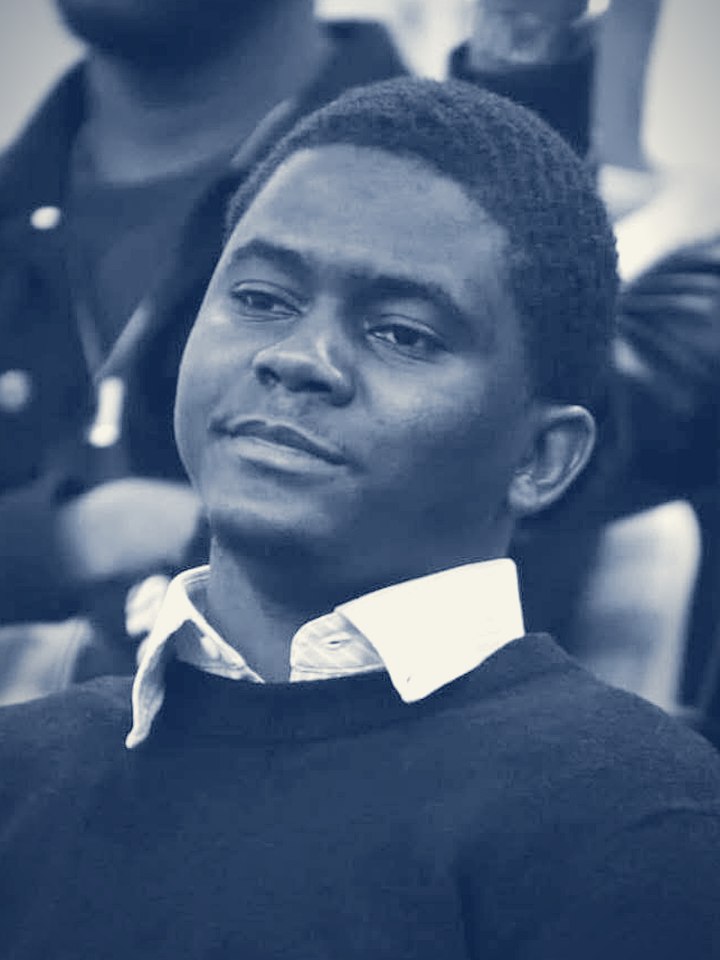
Doxel Tanzey
Kinshasa → Maine Congolese author and scientist based in the United States Auteur et scientifique congolais établi aux États-Unis
FR / EN Every book published in both French and English Chaque livre publié en français et en anglais
Vodacom laureateLauréat Vodacom Selected on merit in the first cohort of the Bourse Vodacom Exetat, 2018 Sélectionné au mérite dans la première promotion de la Bourse Vodacom Exetat, 2018
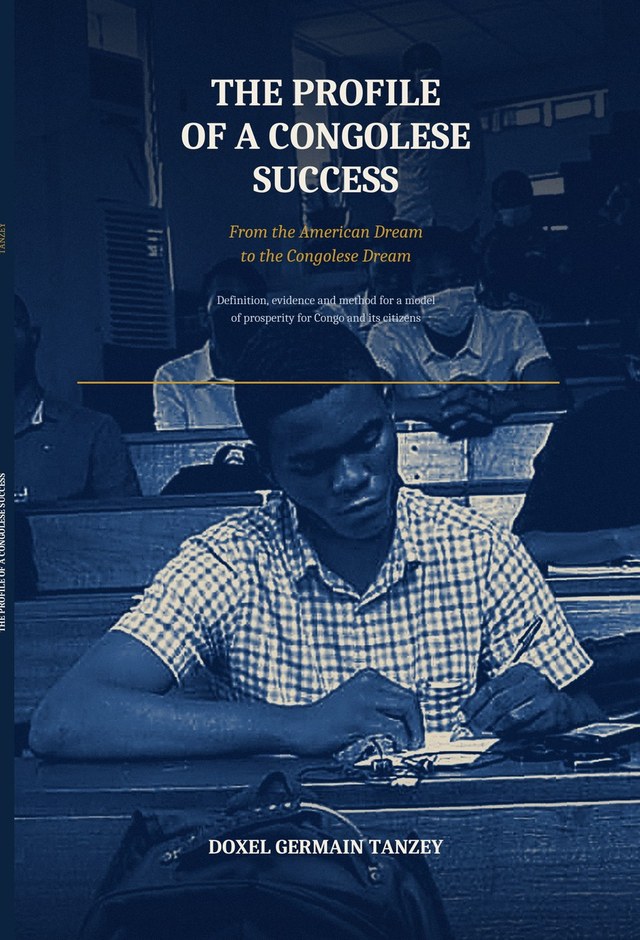
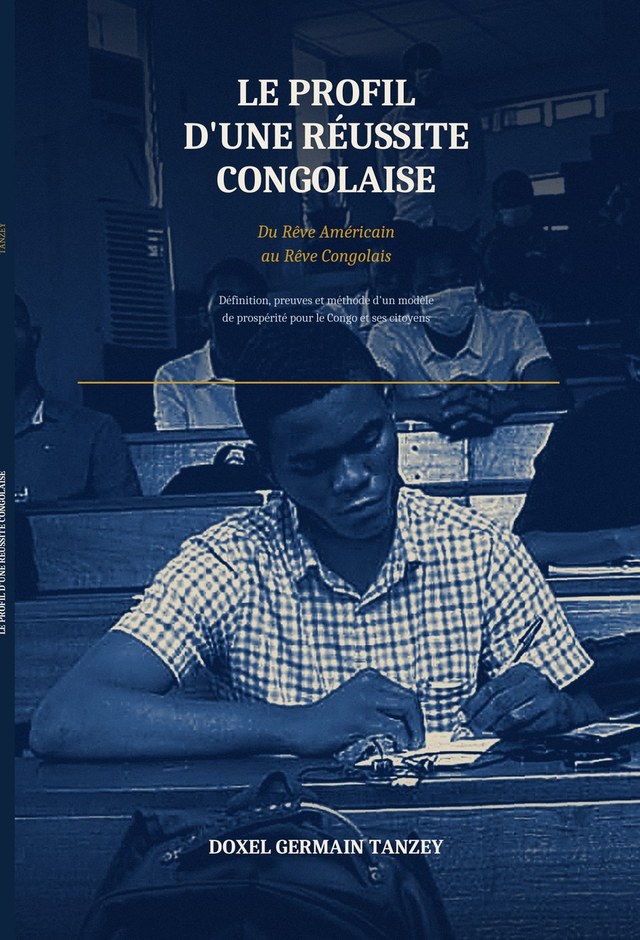
Cover of The Profile of a Congolese Success by Doxel Germain Tanzey Couverture du Profil d'une Réussite Congolaise de Doxel Germain Tanzey
Essay · Economics · Africa
Essai · Économie · Afrique
Featured book Livre à la une

The Profile of a Congolese Success

Le Profil d'une Réussite Congolaise

Congo does not need a miracle. It needs a story, evidence and a method.

Le Congo n'a pas besoin d'un miracle. Il a besoin d'un récit, de preuves et d'une méthode.

Americans gave their national promise a name, and that name did as much for them as their factories. Congolese have not yet named theirs. This book takes the American model apart, tests the Congolese paradox against Botswana, Vietnam and Rwanda, and proposes the Seven Pillars of a Congolese Dream.

Les Américains ont donné un nom à leur promesse nationale, et ce nom a fait leur force autant que leurs usines. Les Congolais n'ont pas encore nommé la leur. Ce livre démonte le modèle américain, confronte le paradoxe congolais au Botswana, au Vietnam et au Rwanda, et propose les Sept Piliers d'un Rêve Congolais.

Three lines of work Trois axes de travail

Science, books, and a vision for Africa

La science, les livres, et une vision pour l'Afrique

01 — LaboratoryLaboratoire

Genetics and molecular biology

Génétique et biologie moléculaire

Bacteriophage genomics, planarian regeneration, and antibody development — the bench work that grounds everything else.

Génomique des bactériophages, régénération chez la planaire, développement d'anticorps — le travail de paillasse qui fonde tout le reste.

See publications →Voir les publications →
02 — WritingÉcriture

Books on success and nations

Des livres sur la réussite et les nations

Research-driven essays on achievement, leadership, and what turns individual effort into collective prosperity.

Des essais documentés sur la réussite, le leadership, et ce qui transforme l'effort individuel en prospérité collective.

See books →Voir les livres →
03 — PlatformTribune

Speaking and teaching

Conférences et enseignement

Universities, churches, conferences, and diaspora gatherings — on science, faith, excellence, and the Congolese Dream.

Universités, églises, conférences et rencontres de la diaspora — sur la science, la foi, l'excellence et le rêve congolais.

Invite me to speak →M'inviter à intervenir →
From the book Extraits

On t'a appris le nom de nos malheurs avant de t'apprendre le nom de nos réussites.

You were taught the names of our misfortunes before you were taught the names of our successes.

Prologue — Lettre au jeune Congolais Prologue — Letter to a young Congolese

Je crois que ma naissance est mon point de départ, pas mon plafond.

I believe my birth is my starting point, not my ceiling.

Le manifeste, chapitre 3 The manifesto, chapter 3

Le seul échec, c'est le jour 91 qui ressemble au jour zéro.

The only failure is a day 91 that looks like day zero.

Chapitre 8 — Tes quatre-vingt-dix premiers jours Chapter 8 — Your first ninety days

English renderings of passages from the French edition.

Extraits de l'édition française.

Newsletter Infolettre

Join the Congolese Dream community

Rejoignez la communauté du Rêve Congolais

New books, scientific ideas, interviews, and a vision for Africa's future. Subscribers receive the Seven Pillars of the Congolese Dream as a free guide.

Nouveaux livres, idées scientifiques, entretiens et une vision pour l'avenir de l'Afrique. Les abonnés reçoivent gratuitement le guide des Sept Piliers du Rêve Congolais.

Books Livres

Published and upcoming work

Ouvrages parus et à paraître

Cover of The Profile of a Congolese Success by Doxel Germain Tanzey Couverture du Profil d'une Réussite Congolaise de Doxel Germain Tanzey
Essay · Economics · Africa
Essai · Économie · Afrique

Editions

Éditions

English — ISBN 9798188052942
French — ISBN 9798188034245
Independently published

Anglais — ISBN 9798188052942
Français — ISBN 9798188034245
Auto-édition

Order a signed copy →Commander un exemplaire dédicacé →

The Profile of a Congolese Success

Le Profil d'une Réussite Congolaise

From the American Dream to the Congolese Dream. Definition, evidence and method for a model of prosperity for Congo and its citizens.

Du Rêve Américain au Rêve Congolais. Définition, preuves et méthode d'un modèle de prospérité pour le Congo et ses citoyens.

Congo does not need a miracle. It needs a story, evidence and a method.

Le Congo n'a pas besoin d'un miracle. Il a besoin d'un récit, de preuves et d'une méthode.

Americans gave their national promise a name: the American Dream. That name did as much for them as their factories, because a people that possesses a story of success manufactures people who try. Congolese have not yet named theirs.

Les Américains ont donné un nom à leur promesse nationale : le Rêve Américain. Ce nom a fait leur force autant que leurs usines, car un peuple qui possède un récit de la réussite produit des gens qui essaient. Les Congolais n'ont pas encore nommé la leur.

This book sets out to do it. It takes the American model apart piece by piece, tests the Congolese paradox against Botswana, Vietnam and Rwanda, then proposes the Seven Pillars of a Congolese Dream — from capitalised work to productive solidarity, from resourcefulness raised into innovation to the diaspora bridge.

Ce livre s'y emploie. Il démonte le modèle américain pièce par pièce, confronte le paradoxe congolais aux trajectoires du Botswana, du Vietnam et du Rwanda, puis propose les Sept Piliers d'un Rêve Congolais — du travail capitalisé à la solidarité productive, de la débrouillardise érigée en innovation au pont de la diaspora.

Then come the proofs: the groundnut that became an industry, the paving-stone factory in Goma, children raised without electricity who became solar entrepreneurs, Mukwege, Mutombo, Muyembe — and above all the invisible successes of the marketplace, documented by field evaluations.

Il apporte ensuite ses preuves : l'arachide devenue industrie, l'usine de pavés de Goma, les enfants sans électricité devenus entrepreneurs du solaire, Mukwege, Mutombo, Muyembe — et surtout les réussites invisibles des marchés, documentées par les évaluations de terrain.

It ends with a method: ninety days to begin, a rule for reconciling family and business, and what the state owes the dreamer — legal security, a workable business climate, and research finally funded.

Il finit par une méthode : quatre-vingt-dix jours pour commencer, une règle pour concilier famille et entreprise, et ce que l'État doit au rêveur — sécurité juridique, climat des affaires, et une recherche enfin financée.

Inside the book

Dans le livre

  • The American model taken apart piece by piece
  • Le modèle américain démonté pièce par pièce
  • The Congolese paradox tested against Botswana, Vietnam and Rwanda
  • Le paradoxe congolais confronté au Botswana, au Vietnam et au Rwanda
  • The Seven Pillars of a Congolese Dream
  • Les Sept Piliers d'un Rêve Congolais
  • The proofs: Goma's paving stones, solar entrepreneurs, the invisible successes of the marketplace
  • Les preuves : les pavés de Goma, les entrepreneurs du solaire, les réussites invisibles des marchés
  • A method: ninety days to begin
  • Une méthode : quatre-vingt-dix jours pour commencer
  • What the state owes the dreamer
  • Ce que l'État doit au rêveur
From the book Extrait
You do not need to leave Congo in order to succeed; and if you have left it, you do not need to forget it in order to move on. Tu n'as pas besoin de quitter le Congo pour réussir ; et si tu l'as quitté, tu n'as pas besoin de l'oublier pour avancer. The Profile of a Congolese Success Le Profil d'une Réussite Congolaise
What readers say Ce que disent les lecteurs

PASTE a review or endorsement here.PASTE ici un avis ou une recommandation.

Name, title, institution
Upcoming project Projet à venir

Success Through the Lens of Behavioral Genetics

La réussite au prisme de la génétique du comportement

The next book turns the same question inward. Achievement is usually explained by effort or by circumstance. Behavioral genetics complicates both stories — and the honest version of that complication is more interesting, and more useful, than either simplification.

Le prochain livre retourne la même question vers l'intérieur. On explique d'ordinaire la réussite par l'effort ou par les circonstances. La génétique du comportement complique ces deux récits — et la version honnête de cette complication est plus intéressante, et plus utile, que l'une ou l'autre simplification.

It will draw on molecular genetics, neuroscience, psychology, and the sociology of institutions, written for readers who are not specialists but refuse to be talked down to.

Il s'appuiera sur la génétique moléculaire, les neurosciences, la psychologie et la sociologie des institutions, écrit pour un lectorat non spécialiste mais exigeant.

Status: research and drafting

Statut : recherche et rédaction

Research Recherche

Scientific and scholarly work

Travaux scientifiques et universitaires

Publications, working papers, and projects in progress across molecular biology, genetics, and comparative policy.

Publications, documents de travail et projets en cours en biologie moléculaire, génétique et politique comparée.

Biotechnology Molecular Biology Genetics Behavioral Genetics Public Health African Development Human Rights & Policy
Published Publié
2025
Microbiology
Resource
Announcements
Open accessLibre accès

Genome sequence of bacteriophage PensacolaC28 isolated using Microbacterium sp. Casco Bay

Girard LR, Cousins SR, Heald AC, Tanzey DA, Omo EM, Flannigan CR, Chung H, Tarbox BP, Savage EF. 2025. Microbiol Resour Announc 14:e01146-24.

A lytic siphovirus recovered from leaf detritus on a Florida beach and propagated on a marine Microbacterium strain isolated from Casco Bay, Maine. Its 16,749 bp genome carries 24 protein-coding genes and matched no existing phage cluster, so it was classified as a singleton. Work completed through the HHMI SEA-PHAGES program at Southern Maine Community College.

Un siphovirus lytique isolé à partir de débris de feuilles sur une plage de Floride et propagé sur une souche marine de Microbacterium provenant de Casco Bay, dans le Maine. Son génome de 16 749 pb comporte 24 gènes codants et ne correspond à aucun groupe de phages connu ; il a donc été classé comme singleton. Travaux réalisés dans le cadre du programme HHMI SEA-PHAGES au Southern Maine Community College.

DOI PubMed PDF GenBank PP978844.1 SRA
Poster Affiche
2024
MDI Biological
Laboratory

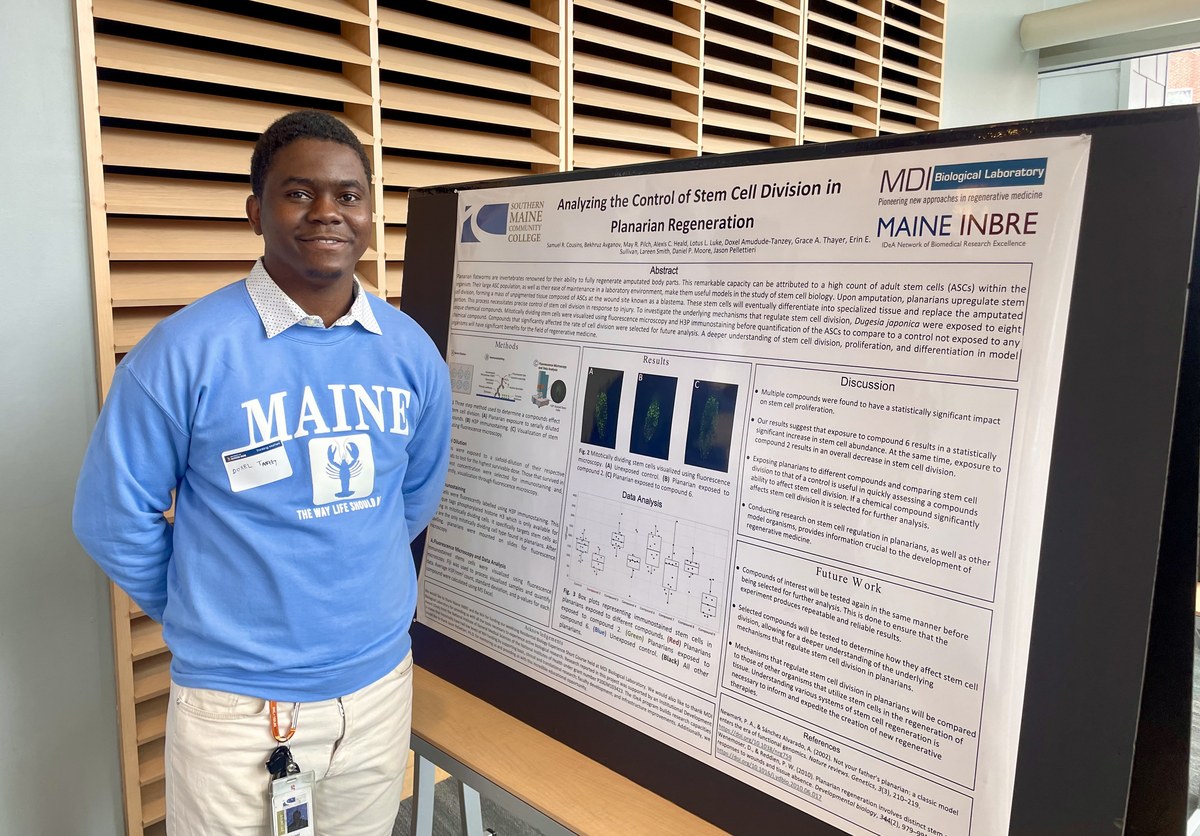
Analyzing the Control of Stem Cell Division in Planarian Regeneration

Cousins SR, Avganov B, Pilch MR, Heald AC, Luke LL, Amudude-Tanzey D, Thayer GA, Sullivan EE, Smith L, Moore DP, Pellettieri J. 2024. Poster. Southern Maine Community College · MDI Biological Laboratory · Maine INBRE.

How neoblast division is regulated during whole-body regeneration in planarian flatworms — an animal that rebuilds an entire body from a fragment without the uncontrolled growth that the same proliferative capacity produces in mammals.

Comment la division des néoblastes est régulée lors de la régénération intégrale chez les planaires — un animal capable de reconstituer un corps entier à partir d'un fragment, sans la croissance incontrôlée qu'une telle capacité proliférative provoquerait chez les mammifères.

Doxel Tanzey beside the planarian regeneration poster at Southern Maine Community College
ResearchGate PDF
Poster Affiche
SEA-PHAGES
Maine INBRE

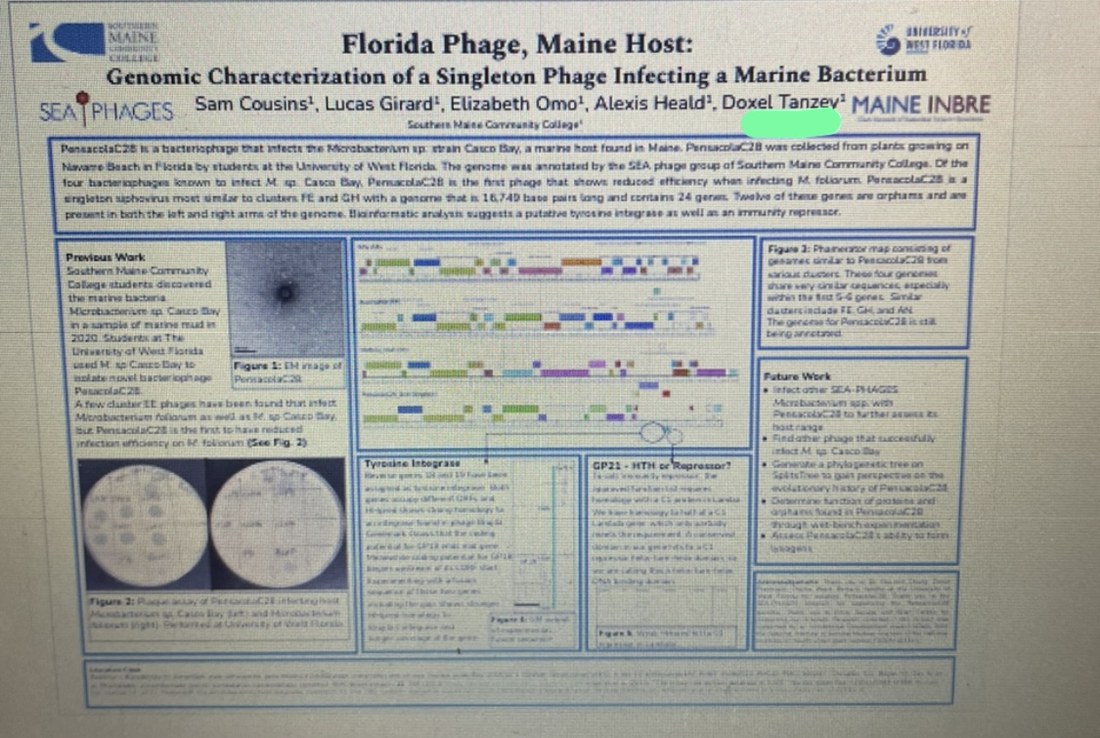
Florida Phage, Maine Host: Genomic Characterization of a Singleton Phage Infecting a Marine Bacterium

Cousins S, Girard L, Omo E, Heald A, Tanzey D. Poster. Southern Maine Community College · University of West Florida · Maine INBRE.

The bench and bioinformatic work behind the published genome: plaque assays, comparative cluster analysis, and annotation of a putative tyrosine integrase and immunity repressor in PensacolaC28.

Le travail de paillasse et de bio-informatique à l'origine du génome publié : tests de plages de lyse, analyse comparative des clusters, et annotation d'une intégrase à tyrosine putative et d'un répresseur d'immunité chez PensacolaC28.

Poster: Florida Phage, Maine Host — genomic characterization of PensacolaC28
Working paper Document de travail
Comparative politicsPolitique comparée

Paramilitary power and constitutional order: the DRC's Force du Progrès and Haiti's Tontons Macoutes

Pouvoir paramilitaire et ordre constitutionnel : la Force du Progrès en RDC et les Tontons Macoutes en Haïti

Manuscript in preparation for submission · human rights and comparative constitutional law

Manuscrit en préparation · droits humains et droit constitutionnel comparé

A comparative analysis of state-aligned paramilitary formations, the legal architectures that permit them, and the long-run institutional damage they leave behind.

Analyse comparée des formations paramilitaires liées à l'État, des architectures juridiques qui les autorisent et des dommages institutionnels durables qu'elles laissent.

AbstractRésumé
Working paper Document de travail
International relationsRelations internationales

Congolese soft power: culture, diaspora, and influence without leverage

Le soft power congolais : culture, diaspora et influence sans levier

Comparative essay · University of Southern Maine

Essai comparatif · University of Southern Maine

How music, faith communities, and diaspora networks generate Congolese cultural reach that has not yet been converted into diplomatic or economic power.

Comment la musique, les communautés de foi et les réseaux de la diaspora produisent un rayonnement culturel congolais encore non converti en puissance diplomatique ou économique.

PDF

Research profiles

Profils de chercheur

Laboratory experience

Expérience en laboratoire

  • MDI Biological Laboratory — planarian regeneration and stem cell biology
  • MDI Biological Laboratory — régénération de la planaire et biologie des cellules souches
  • IDEXX Laboratories — R&D, ELISA development and recombinant antibodies
  • IDEXX Laboratories — R&D, développement d'ELISA et anticorps recombinants
  • HHMI SEA-PHAGES — phage isolation, sequencing, and genome annotation
  • HHMI SEA-PHAGES — isolement de phages, séquençage et annotation de génomes
Biography Biographie

About the author

À propos de l'auteur

Doxel Tanzey

Press kit

Dossier de presse

Short biography, high-resolution portrait, book covers, and interview topics in one download.

Biographie courte, portrait haute résolution, couvertures et thèmes d'entretien en un seul téléchargement.

Download press kitTélécharger le dossier

Early life and education

Origines et formation

Doxel Tanzey was born and raised in Kinshasa. After completing the Examen d'État in 2018, he was selected through competitive examination as a laureate of the Bourse Vodacom Exetat, the Fondation Vodacom Congo scholarship established that year to carry the country's strongest secondary-school finalists through university. He enrolled at the faculty of medicine of the University of Kinshasa intending to practise as a clinician.

Three things redirected him. His father died of cancer. The COVID-19 pandemic arrived. And the political situation in Congo made plain how much of what harms people is settled long before anyone reaches a consulting room. A doctor saves the patient in front of him, one at a time; research can reach everyone who will ever have the disease. He turned toward the laboratory.

He continued his education in the United States, earning an associate degree from Southern Maine Community College and a Bachelor of Science in Biology from the University of Southern Maine, with concentrations in human biology and biotechnology. He is now pursuing a master's degree in genetics and molecular biology at USM.

Doxel Tanzey est né et a grandi à Kinshasa. Après son Examen d'État en 2018, il est sélectionné sur épreuves comme lauréat de la Bourse Vodacom Exetat, le programme de la Fondation Vodacom Congo créé cette année-là pour accompagner à l'université les meilleurs finalistes du secondaire du pays. Il s'inscrit ensuite à la faculté de médecine de l'Université de Kinshasa avec l'intention d'exercer comme clinicien.

Trois choses l'ont réorienté. Son père meurt d'un cancer. La pandémie de COVID-19 survient. Et la situation politique du Congo rend évident à quel point ce qui frappe les gens se décide bien avant qu'ils n'arrivent en consultation. Un médecin sauve le patient qui est devant lui, un à la fois ; la recherche, elle, peut atteindre tous ceux qui auront un jour la maladie. Il s'est tourné vers le laboratoire.

Il poursuit sa formation aux États-Unis : diplôme d'associé au Southern Maine Community College, puis licence en biologie à l'University of Southern Maine, avec spécialisations en biologie humaine et en biotechnologie. Il y prépare aujourd'hui un master en génétique et biologie moléculaire.

The path

Le parcours

  • NextEnsuite PhD, MD/PhD, or law Doctorat, MD/PhD, ou droit Discovery, translation, or the law that governs both — a question deliberately still open La découverte, la traduction, ou le droit qui gouverne les deux — une question volontairement ouverte
  • NowAujourd'hui MS, Genetics and Molecular Biology Master, génétique et biologie moléculaire University of Southern Maine
  • 2025 First peer-reviewed publication Première publication à comité de lecture Microbiology Resource Announcements, American Society for Microbiology Microbiology Resource Announcements, American Society for Microbiology
  • 2024 Research and development, ELISAs and recombinant antibodies Recherche et développement, ELISA et anticorps recombinants IDEXX Laboratories, Westbrook, Maine
  • 2024 Stem cell and regeneration research Recherche sur les cellules souches et la régénération MDI Biological Laboratory, Bar Harbor, Maine
  • 2023–20242023–2024 Bacteriophage isolation and genome annotation, HHMI SEA-PHAGES Isolement de phages et annotation de génomes, HHMI SEA-PHAGES Southern Maine Community College
  • 2018 Laureate, Bourse Vodacom Exetat Lauréat, Bourse Vodacom Exetat Selected by competitive examination in the programme's first cohort, from candidates across the DRC. Fondation Vodacom Congo Sélectionné sur épreuves, parmi la première promotion du programme, parmi des candidats de toute la RDC. Fondation Vodacom Congo
  • EarlierAuparavant Medicine, then the turn to research La médecine, puis le choix de la recherche Faculty of Medicine, University of Kinshasa, DR Congo Faculté de médecine, Université de Kinshasa, RD Congo
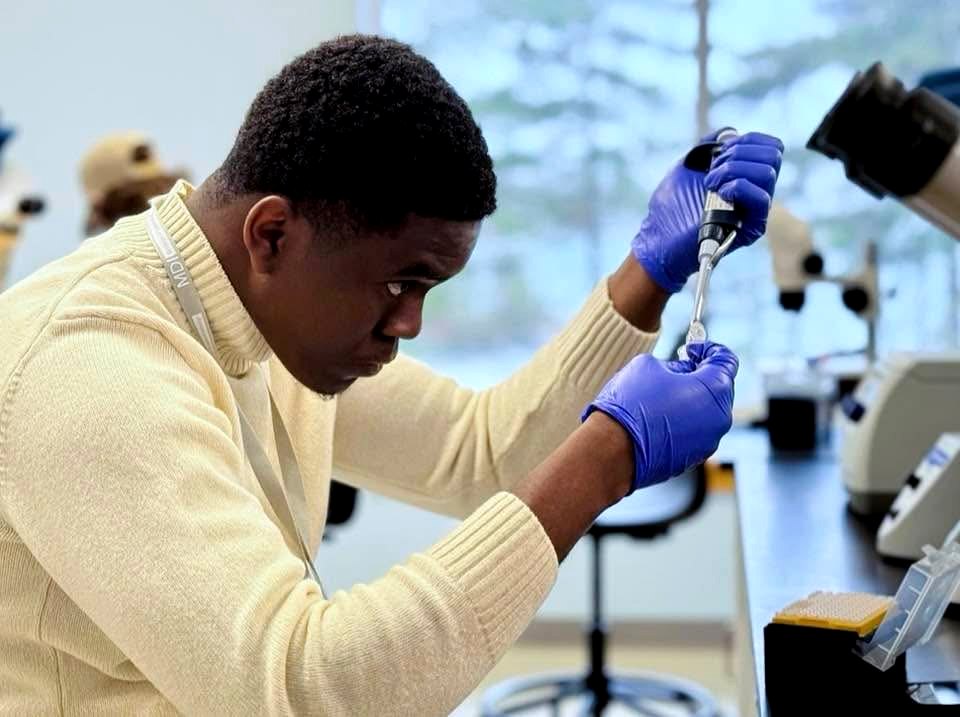
Doxel Tanzey pipetting at the bench, MDI Biological Laboratory
At the bench, MDI Biological Laboratory, Bar Harbor, Maine
À la paillasse, MDI Biological Laboratory, Bar Harbor, Maine

Scientific journey

Parcours scientifique

His research has ranged from bacteriophage genomics through the HHMI SEA-PHAGES program — where he co-authored a published genome announcement — to stem cell and regeneration work with planarians at MDI Biological Laboratory, and antibody research and development at IDEXX Laboratories. The common thread is a fascination with how biological systems repair, adapt, and encode the instructions for their own behavior.

Ses recherches vont de la génomique des bactériophages, dans le cadre du programme HHMI SEA-PHAGES — où il est co-auteur d'un génome publié — aux travaux sur les cellules souches et la régénération chez la planaire au MDI Biological Laboratory, jusqu'à la recherche et développement en anticorps chez IDEXX Laboratories. Le fil conducteur : la fascination pour la manière dont les systèmes biologiques se réparent, s'adaptent et encodent les instructions de leur propre comportement.

Writing and intellectual work

Écriture et travail intellectuel

He began writing because the question that occupied him in the laboratory would not stay in the laboratory. If biology explains how organisms flourish under constraint, something must also explain why some people and some countries flourish under constraint while others, holding far more, do not. That question produced The Profile of a Congolese Success, published simultaneously in French and English.

Il s'est mis à écrire parce que la question qui l'occupait au laboratoire refusait d'y rester. Si la biologie explique comment les organismes prospèrent sous contrainte, il doit exister une explication au fait que certaines personnes et certains pays prospèrent sous contrainte tandis que d'autres, bien mieux dotés, échouent. De cette question est né Le Profil d'une Réussite Congolaise, publié simultanément en français et en anglais.

Vision

Vision

When the master's is finished, what follows is a question he is deliberately keeping open. A PhD is the obvious continuation. An MD/PhD would return him to the clinic without taking him from the bench. A law degree specialising in healthcare and life sciences law would place him where the rules are written that decide which discoveries reach patients, and at what price.

These are not rival ambitions so much as three answers to the same question — the one that moved him out of clinical medicine in the first place. At which point in the chain does one person do the most good: discovery, translation, or the law that governs both?

His long-term work sits at the meeting point of behavioral genetics, science policy, and African development: building research capacity on the continent, writing for a francophone and anglophone public at once, and arguing that scientific literacy is not a luxury for a developing nation but a precondition for one.

Le master achevé, la suite reste une question qu'il garde délibérément ouverte. Le doctorat en est la continuation évidente. Un MD/PhD le ramènerait à la clinique sans le retirer de la paillasse. Un diplôme de droit, spécialisé en droit de la santé et des sciences du vivant, le placerait là où s'écrivent les règles qui décident quelles découvertes parviennent aux patients, et à quel prix.

Ce ne sont pas des ambitions rivales, mais trois réponses à une même question — celle qui l'a détourné de la médecine clinique. À quel maillon de la chaîne un seul homme fait-il le plus de bien : la découverte, la traduction, ou le droit qui gouverne les deux ?

Son travail de fond se situe au croisement de la génétique du comportement, de la politique scientifique et du développement africain : renforcer les capacités de recherche sur le continent, écrire pour un public francophone et anglophone à la fois, et défendre l'idée que la culture scientifique n'est pas un luxe pour une nation en développement, mais une condition préalable.

Short biography — for programs and introductions

Biographie courte — pour programmes et présentations

Doxel Tanzey is a Congolese author and scientist based in the United States. Trained in biology and biotechnology, with research experience in bacteriophage genomics, regenerative biology, and antibody development, he writes about success, human behavior, and the institutional conditions that allow individuals and nations to prosper. He is the author of The Profile of a Congolese Success.

Doxel Tanzey est un auteur et scientifique congolais établi aux États-Unis. Formé en biologie et biotechnologie, avec une expérience de recherche en génomique des bactériophages, en biologie régénérative et en développement d'anticorps, il écrit sur la réussite, le comportement humain et les conditions institutionnelles qui permettent aux individus et aux nations de prospérer. Il est l'auteur du Profil d'une Réussite Congolaise.

Articles and insights Articles et réflexions

Shorter essays, published between books

Essais brefs, publiés entre deux livres

Science Faith & SuccessFoi et réussite Congo & AfricaCongo et Afrique Leadership PsychologyPsychologie Behavioral geneticsGénétique du comportement EducationÉducation Diaspora

Why Congo must invest in scientific research

Pourquoi le Congo doit investir dans la recherche scientifique

A country that imports all of its knowledge will import all of its solutions, on someone else's terms and at someone else's price.

Un pays qui importe tout son savoir importera toutes ses solutions, aux conditions et au prix d'autrui.

Science·10 min

Success without losing your soul

Réussir sans perdre son âme

Ambition and integrity are usually presented as a trade. They are not, but keeping them together requires deciding in advance what you will not do.

On présente d'ordinaire l'ambition et l'intégrité comme un échange. Elles ne le sont pas, mais les tenir ensemble exige de décider à l'avance ce que l'on ne fera pas.

Faith & Success·8 min

The diaspora as an artery, not a hemorrhage

La diaspora comme artère, non comme hémorragie

Congolese emigration is described as a loss. Measured properly — in remittances, training, and returned expertise — it is closer to a circulatory system that has not been connected.

On décrit l'émigration congolaise comme une perte. Bien mesurée — transferts, formation, expertise rapatriée — elle ressemble plutôt à un système circulatoire qu'on n'a jamais raccordé.

Congo & Africa·11 min

Can science help us understand human achievement?

La science peut-elle éclairer la réussite humaine ?

What genetics can and cannot tell us about why people differ — and why the honest answer is more interesting than either the hereditarian or the blank-slate version.

Ce que la génétique peut, et ne peut pas, dire des différences entre les personnes — et pourquoi la réponse honnête est plus intéressante que la version héréditariste ou celle de la page blanche.

Behavioral geneticsGénétique du comportement·14 min

Why natural resources alone do not create prosperity

Pourquoi les ressources naturelles ne créent pas la prospérité

Cobalt does not build a country. Institutions that can tax, teach, and enforce contracts do — and the Congo has the first without enough of the second.

Le cobalt ne bâtit pas un pays. Des institutions capables de lever l'impôt, d'enseigner et de faire respecter les contrats, oui — et le Congo possède le premier sans assez des secondes.

Leadership·9 min

These are the planned opening essays. Replace each link with the published article once it goes live.

Voici les premiers essais prévus. Remplacez chaque lien par l'article publié dès sa mise en ligne.

Media and speaking Médias et conférences

Available for interviews and talks

Disponible pour interviews et conférences

Universities, churches, conferences, podcasts, television, radio, and community events — in French or English.

Universités, églises, conférences, podcasts, télévision, radio et événements communautaires — en français ou en anglais.

Speaking topics

Thèmes d'intervention

  • The Congolese Dream
  • Le Rêve Congolais
  • Success without losing your soul
  • Réussir sans perdre son âme
  • Science and national development
  • Science et développement national
  • The role of the African diaspora
  • Le rôle de la diaspora africaine
  • Faith, excellence, and social transformation
  • Foi, excellence et transformation sociale
  • Behavioral genetics and human success
  • Génétique du comportement et réussite humaine
  • Young Africans in science and leadership
  • Jeunes Africains, science et leadership

Appearances

Apparitions

Television Télévision
2023
WGME
CBS 13

Maine groups work together to put waste to good use

WGME CBS 13, Portland, Maine · Mike Hartford · 25 March 2023

Interviewed as a participant in a design challenge run by ecomaine, the University of Southern Maine and partner organisations, turning waste streams into working prototypes.

Interviewé comme participant à un concours de conception organisé par ecomaine, l'University of Southern Maine et des partenaires, visant à transformer des déchets en prototypes fonctionnels.

Watch the segmentVoir le reportage
Conference Conférence
2025
Washington,
D.C.

VERITAS — Thomistic Institute

The Catholic University of America, Washington, D.C. · June 2025

The Thomistic Institute's annual gathering of student leaders, members and speakers, on philosophy, theology and the intellectual life — the ground where his interest in faith, excellence and social transformation meets his scientific work.

La rencontre annuelle du Thomistic Institute, réunissant responsables étudiants, membres et intervenants autour de la philosophie, de la théologie et de la vie intellectuelle — le terrain où son intérêt pour la foi, l'excellence et la transformation sociale rejoint son travail scientifique.

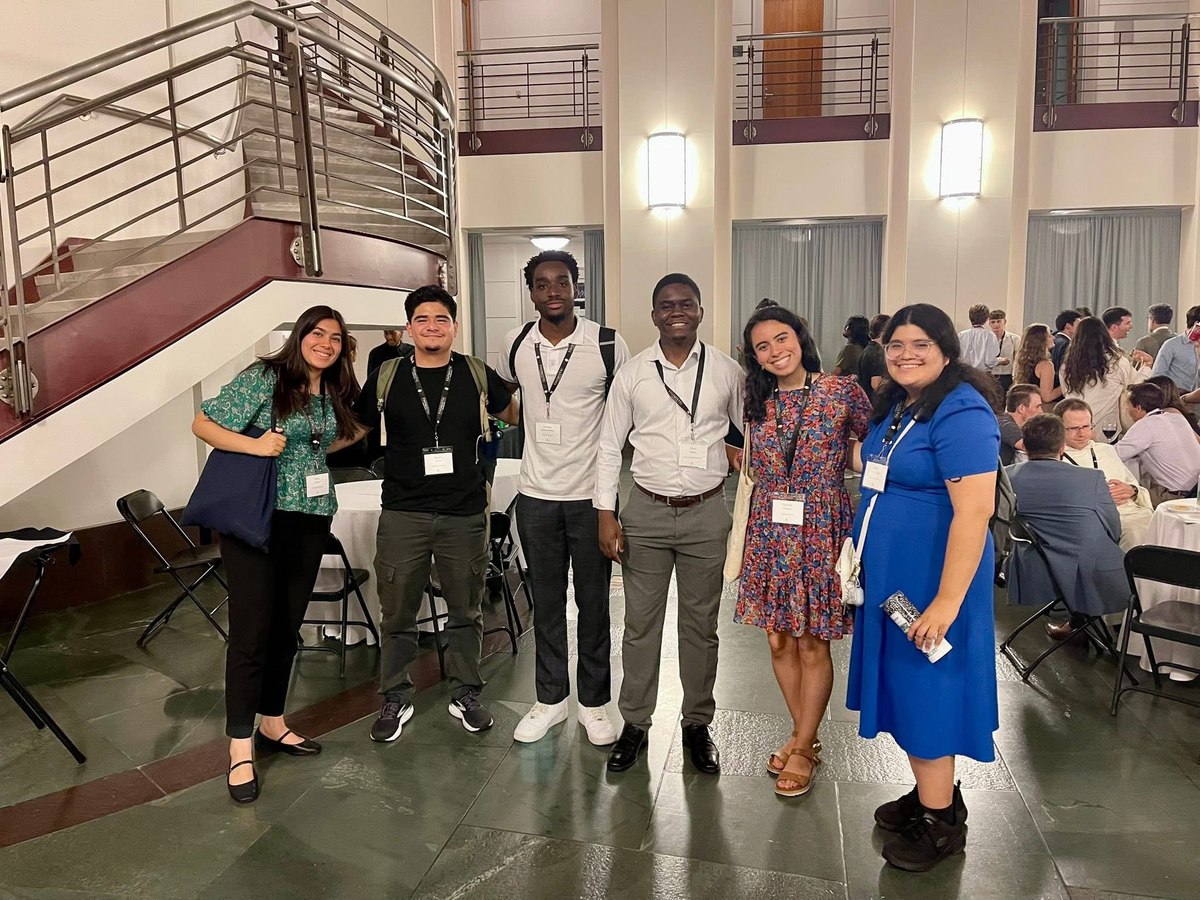
Doxel Tanzey with fellow attendees at the VERITAS conference, Catholic University of America
VERITAS, the Thomistic Institute's annual conference — The Catholic University of America, Washington, D.C., June 2025
VERITAS, conférence annuelle du Thomistic Institute — The Catholic University of America, Washington, D.C., juin 2025
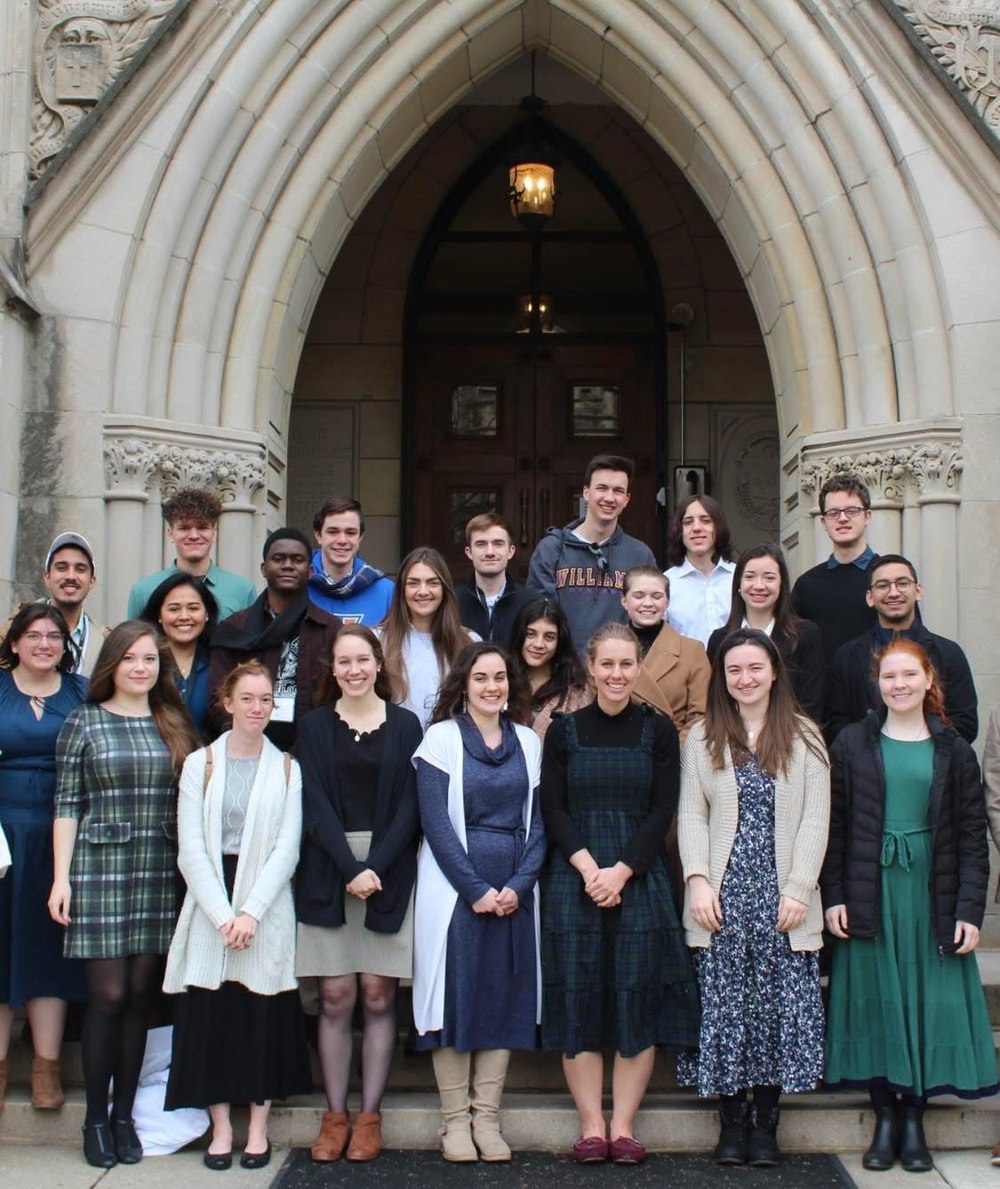
Doxel Tanzey with a student cohort
With a student cohort
Avec une promotion d'étudiants
Contact Contact

Get in touch

Écrivez-moi

All articlesTous les articles Science · Congo

Why Congo must invest in research

Pourquoi le Congo doit investir dans la recherche

I write this with the bias of someone who chose the profession, and I would rather say so at the outset. I am a science student. I have pipetted reagents, cultured bacteria, sequenced the genome of a bacteriophage. You are entitled to suspect me of pleading my own case. I ask only that you weigh the numbers, because the numbers are not mine.

J'aborde ce sujet avec la partialité de celui qui a choisi ce métier, et je préfère l'annoncer d'emblée. Je suis étudiant en sciences. J'ai pipeté des réactifs, cultivé des bactéries, séquencé le génome d'un bactériophage. Le lecteur est donc en droit de me soupçonner de plaider pour ma paroisse. Je lui demande seulement de peser les chiffres, car ils ne sont pas de moi.

The most vertiginous gap of all

L'écart le plus vertigineux de tous

There are many gaps between Congo and the world — poverty, electricity, roads. None is as dizzying as this one. In 2023 the world spent 1.92% of its gross domestic product on research and development. Sub-Saharan Africa spent 0.38%.

Il existe bien des écarts entre le Congo et le monde : la pauvreté, l'électricité, les routes. Aucun n'atteint le vertige de celui-ci. En 2023, le monde consacrait 1,92 % de son produit intérieur brut à la recherche et développement ; l'Afrique subsaharienne y consacrait 0,38 %.

But the figure that should keep us awake is not the money. It is the people.

Mais le chiffre qui devrait nous empêcher de dormir n'est pas celui de l'argent. C'est celui des femmes et des hommes.

4 358 researchers per million people — Europe and North America chercheurs par million d'habitants — Europe et Amérique du Nord
88 researchers per million people — sub-Saharan Africa chercheurs par million d'habitants — Afrique subsaharienne

Four thousand three hundred and fifty-eight against eighty-eight. A ratio of one to forty-nine. Read that proportion alongside something anyone who knows the diaspora can confirm: the Congolese who emigrates succeeds, graduates, publishes. The problem is therefore not the number of Congolese minds. It is the number of Congolese posts offered to those minds.

Quatre mille trois cent cinquante-huit contre quatre-vingt-huit. Un rapport de un à quarante-neuf. Relisons cette proportion en pensant à ce que chacun peut vérifier : le Congolais qui émigre réussit, se diplôme, publie. Le problème n'est donc pas le nombre de cerveaux congolais — c'est le nombre de postes congolais offerts à ces cerveaux.

The African Union set itself the target of devoting 1% of GDP to research years ago. Only three countries in sub-Saharan Africa come close — South Africa, Kenya and Senegal, at around 0.8%. The Democratic Republic of Congo, second in Africa by area and fourth by population, is not among them.

L'Union africaine s'est fixé, il y a des années déjà, l'objectif de consacrer 1 % du PIB à la recherche ; à ce jour, seuls trois pays d'Afrique subsaharienne en approchent — l'Afrique du Sud, le Kenya et le Sénégal, autour de 0,8 %. La République démocratique du Congo, deuxième pays d'Afrique par la superficie, quatrième par la population, n'en est pas.

The poor country's objection

L'objection du pauvre

The objection arrives immediately, and it deserves respect. How can you ask a country where three people in four live on less than $2.15 a day to fund laboratories? Research, says the objection, is a rich nation's luxury. Let us feed people first and do science afterwards.

L'objection vient immédiatement, et elle est respectable : comment demander à un pays où trois personnes sur quatre vivent avec moins de 2,15 dollars par jour de financer des laboratoires ? La recherche, dit l'objection, est un luxe de riches ; nourrissons d'abord, nous chercherons ensuite.

It is wrong, for three reasons. The first is historical. No country grew rich and then took up research; every one of them did both together. South Korea in the 1960s was poorer than Congo in the same decade. It now spends close to 4.6% of GDP on research and ranks among the most research-intensive economies on earth. It did not wait until it was rich to invest in science. It became rich because it invested in science while it was poor.

Elle est fausse pour trois raisons. La première est historique. Aucun pays ne s'est enrichi puis mis à la recherche ; tous ont fait les deux ensemble. La Corée du Sud des années 1960 était plus pauvre que le Congo de la même décennie ; elle consacre aujourd'hui près de 4,6 % de son PIB à la recherche et figure au premier rang mondial en intensité. Elle n'a pas attendu d'être riche pour investir dans la science : elle est devenue riche parce qu'elle a investi dans la science pendant qu'elle était pauvre.

You do not save because you have money to spare. You have money because you saved when you had none.
On n'épargne pas parce qu'on a de l'argent en trop ; on a de l'argent parce qu'on a épargné quand on n'en avait pas.

The second reason is economic. Everyone agrees Congo should process its own minerals. But processing requires chemists, metallurgists, process engineers. A country that trains no researchers will never refine its cobalt: it will go on selling rock and buying back the battery. And the value of a deposit is negotiated far better when you have your own geologists than when you take the buyer's survey on trust. Research is not an ornament of sovereignty. It is its technical precondition.

La deuxième raison est économique. Tout le monde s'accorde à dire que le Congo doit transformer ses minerais ; mais transformer suppose des chimistes, des métallurgistes, des ingénieurs des procédés. Un pays qui ne forme pas de chercheurs ne raffinera jamais son cobalt : il continuera de le vendre en roche et de racheter la batterie. De même, la valeur d'un gisement se négocie mieux quand on possède ses propres géologues que lorsqu'on croit sur parole les études fournies par l'acheteur. La recherche n'est pas un ornement de la souveraineté : elle en est la condition technique.

The third reason is vital, in the literal sense. Our diseases are ours. Ebola emerged among us, by the river of that name. It was a Congolese, Professor Muyembe, who went to Yambuku in 1976 to find the virus; and it was in the DRC, from the blood of a Congolese survivor, that one of the treatments now used worldwide was developed and validated. Malaria, sickle cell disease, malnutrition, the cassava mosaic that ruins our farmers' fields — nobody on earth has more reason to work on these than we do, and nobody will work on them in our place with the same urgency. To wait for the laboratories of Europe and America to take an interest in our priorities is to wait for our priorities to become theirs. That happens after the epidemic, never before it.

La troisième raison est vitale, au sens propre. Nos maladies sont les nôtres. Ebola a émergé chez nous, près de la rivière du même nom ; c'est un Congolais, le professeur Muyembe, qui est allé chercher le virus à Yambuku en 1976, et c'est en RDC, à partir du sang d'un survivant congolais, que fut développé puis validé l'un des traitements aujourd'hui utilisés dans le monde. Le paludisme, la drépanocytose, la malnutrition, la mosaïque du manioc qui ravage les champs de nos paysans : personne au monde n'a autant de raisons que nous d'y travailler, et personne n'y travaillera à notre place avec la même urgence. Attendre que les laboratoires d'Europe et d'Amérique s'intéressent à nos priorités, c'est attendre que nos priorités deviennent les leurs. Cela n'arrive qu'après l'épidémie, et jamais avant.

What Congo already has

Ce que le Congo possède déjà

The page is not blank, and it would be unfair to paint it so. The country has a real scientific tradition: the Institut National de Recherche Biomédicale, which stood at the front line of the Ebola and mpox epidemics; the agronomic research institute; the faculties of medicine and science in Kinshasa, Lubumbashi and Kisangani, which still produce graduates whom foreign universities recruit eagerly. Above all it possesses an object of study no one else has — the second largest tropical forest on the planet, unmatched biodiversity, an immense river basin. That is scientific capital neither Korea nor Switzerland can buy.

Le tableau n'est pas vierge, et il serait injuste de le peindre ainsi. Le pays possède une tradition scientifique réelle : l'Institut national de recherche biomédicale, qui fut au front des épidémies d'Ebola et de mpox ; l'Institut national pour l'étude et la recherche agronomiques ; les facultés de médecine et de sciences de Kinshasa, de Lubumbashi et de Kisangani, qui forment encore des diplômés que les universités étrangères recrutent avec empressement. Il possède surtout un objet d'étude unique au monde : le deuxième massif forestier tropical de la planète, une biodiversité inégalée, un bassin fluvial immense — c'est-à-dire un capital scientifique que ni la Corée ni la Suisse ne peuvent acheter.

What is missing is not the material. It is the chain. Laboratories that are equipped and have electricity. Operating budgets, not only salaries. Journals and databases within reach. Careers in which a young doctor can live decently without stacking up teaching hours. And above all an organised link between research and enterprise, which barely exists.

Ce qui manque n'est donc pas la matière ; c'est la chaîne. Des laboratoires équipés et alimentés en électricité. Des budgets de fonctionnement, et pas seulement des salaires. Des revues et des bases de données accessibles. Des carrières où un jeune docteur puisse vivre décemment sans multiplier les vacations. Et surtout, un lien organisé entre la recherche et l'entreprise, qui n'existe presque pas.

Five measures

Cinq mesures

Keep the 1% promise — not at a stroke, which no budget would survive, but on an announced and auditable path: one additional tenth of a percentage point of GDP each year, publicly verified. What can be measured, citizens can demand.

Tenir la promesse du 1 % — non pas d'un coup, ce que le budget ne supporterait pas, mais par une trajectoire annoncée et vérifiable : un dixième de point de PIB supplémentaire par an, publiquement audité. Ce que l'on peut mesurer, les citoyens peuvent l'exiger.

Use the rent to fund what comes after the rent. Let a fraction of mining royalties, however modest, feed a national research fund with independent governance and published accounts. Botswana turned its diamonds into schools. Cobalt can be turned into laboratories. An exhaustible resource financing cumulative knowledge — that is capitalised work at the scale of a nation.

Financer par la rente ce qui prépare l'après-rente. Qu'une fraction, même modeste, des redevances minières alimente un fonds national de la recherche, à gouvernance indépendante et à comptes publiés. Le Botswana a converti son diamant en écoles ; le cobalt peut se convertir en laboratoires. Une ressource épuisable qui finance un savoir cumulatif : voilà le travail capitalisé à l'échelle d'une nation.

Research what the country needs. Congo cannot afford to study everything; it can afford to choose. Five priorities select themselves: the diseases that kill us; the agronomy of the crops we eat — cassava, maize, rice, groundnut; decentralised energy technology; the metallurgy and chemistry of our own minerals; and digital tools applied to our failing public services. Research that answers the question "what is needed here?" finds funding more easily than research imitating the fashions of northern journals.

Chercher ce dont le pays a besoin. Le Congo n'a pas les moyens de tout étudier ; il a les moyens de choisir. Cinq priorités s'imposent : les maladies qui nous tuent, l'agronomie des cultures que nous mangeons — manioc, maïs, riz, arachide —, les technologies de l'énergie décentralisée, la métallurgie et la chimie de nos minerais, et le numérique appliqué à nos services publics défaillants. Une recherche qui répond à la question « que faut-il ici ? » trouve son financement plus facilement qu'une recherche qui imite les modes des revues du Nord.

Connect the laboratory to the workshop. Let universities file patents, spin out companies, contract with industry; let firms that fund local research find a clear tax advantage in doing so. Without that bridge, a country can publish a great deal and grow rich on none of it.

Relier le laboratoire à l'atelier. Que les universités soient autorisées et encouragées à déposer des brevets, à créer des entreprises issues de leurs travaux, à contractualiser avec l'industrie ; que les entreprises qui financent de la recherche locale y trouvent un avantage fiscal clair. Sans ce pont, un pays peut publier beaucoup et ne s'enrichir de rien.

Make diaspora researchers colleagues rather than exiles. A Congolese professor in Louvain, Montreal or Boston can co-supervise a thesis in Kinshasa from her office, bring a Congolese laboratory into an international consortium, host a doctoral student for six months. It costs almost nothing and is worth years of catching up. Circulation of minds, preferred to their flight.

Faire des chercheurs de la diaspora des collègues plutôt que des exilés. Un professeur congolais de Louvain, de Montréal ou de Boston peut co-diriger une thèse à Kinshasa depuis son bureau, faire accéder un laboratoire congolais à un consortium international, accueillir un doctorant six mois. Cela ne coûte presque rien et vaut des années de rattrapage. C'est la circulation des cerveaux préférée à leur fuite.

A personal note

Une note personnelle

Forgive me for ending in the first person. My name appears on a scientific publication — the genome of a bacteriophage, sequenced within an undergraduate research programme. I take no glory from it: thousands of students do the same every year. That is precisely what haunts me. The work required neither genius nor a fortune. It required a programme, a supervisor, a sequencer, and a little time. None of that was beyond Congo's reach. All of it was simply absent from the place where I was born.

Qu'on me pardonne de finir à la première personne. Mon nom figure sur une publication scientifique — le génome d'un bactériophage, séquencé dans le cadre d'un programme de recherche pour étudiants de premier cycle. Je n'en tire aucune gloire : des milliers d'étudiants le font chaque année. C'est précisément ce qui m'obsède. Ce travail n'a exigé ni génie, ni fortune : il a exigé un programme, un encadrant, un séquenceur et un peu de temps. Rien de tout cela n'était hors de portée du Congo ; tout cela était simplement absent de l'endroit où je suis né.

Competence is the one form of capital nobody can confiscate. Research is the collective form of that competence: it is how an entire nation learns, in public, and passes on what it has learned. A country that does not search is condemned to buy other people's answers for ever — usually to other people's questions. Congo has too many questions that belong to it alone to be able to afford that.

La compétence est le seul capital que nul ne peut confisquer. La recherche est la forme collective de cette compétence : c'est la manière dont une nation entière apprend, en public, et transmet ce qu'elle a appris. Un pays qui ne cherche pas est condamné à acheter éternellement les réponses des autres — souvent aux questions des autres. Le Congo a trop de questions qui n'appartiennent qu'à lui pour se le permettre.

What you can do. If you are a student, find a laboratory, a supervisor, a research programme this year — however modest, however unpaid. The first research experience is the hardest to obtain and the most decisive. If you run a business, take one technical question your work keeps running into and offer it to a university in your city as a dissertation topic. If you are part of the scientific diaspora, give two hours a month to a laboratory or a student back home.

Ce que tu peux faire. Si tu es étudiant : cherche dès cette année un laboratoire, un encadrant, un programme de recherche — même modeste, même bénévole. La première expérience de recherche est la plus difficile à obtenir et la plus déterminante. Si tu es entrepreneur : formule une question technique que ton activité rencontre et propose-la à une université de ta ville comme sujet de mémoire. Si tu es de la diaspora scientifique : offre deux heures par mois à un laboratoire ou à un étudiant du pays.

Figures from the UNESCO Institute for Statistics (R&D indicators, 2023 data) and the African Union's 1% target. Fully referenced in chapter 12 of The Profile of a Congolese Success.

Chiffres de l'Institut de statistique de l'UNESCO (indicateurs R&D, données 2023) et objectif de 1 % de l'Union africaine. Références complètes au chapitre 12 du Profil d'une Réussite Congolaise.
The Profile of a Congolese Success Le Profil d'une Réussite Congolaise
This essay is chapter 12 Cet essai est le chapitre 12

The Profile of a Congolese Success

Le Profil d'une Réussite Congolaise

Thirteen further chapters make the same argument at the scale of a person, a neighbourhood and a state — with the evidence, the sources and the method.

Treize autres chapitres portent le même raisonnement à l'échelle d'une personne, d'un quartier et d'un État — avec les preuves, les sources et la méthode.